Solar Lights
Company
Shop By Category
T&Cs
Shop Online
  • Box contents listed
  • Free tracked NZ-wide delivery over $119
  • 14-day returns

Solar driveway lights | solar ground marker lights | drive over solar lights

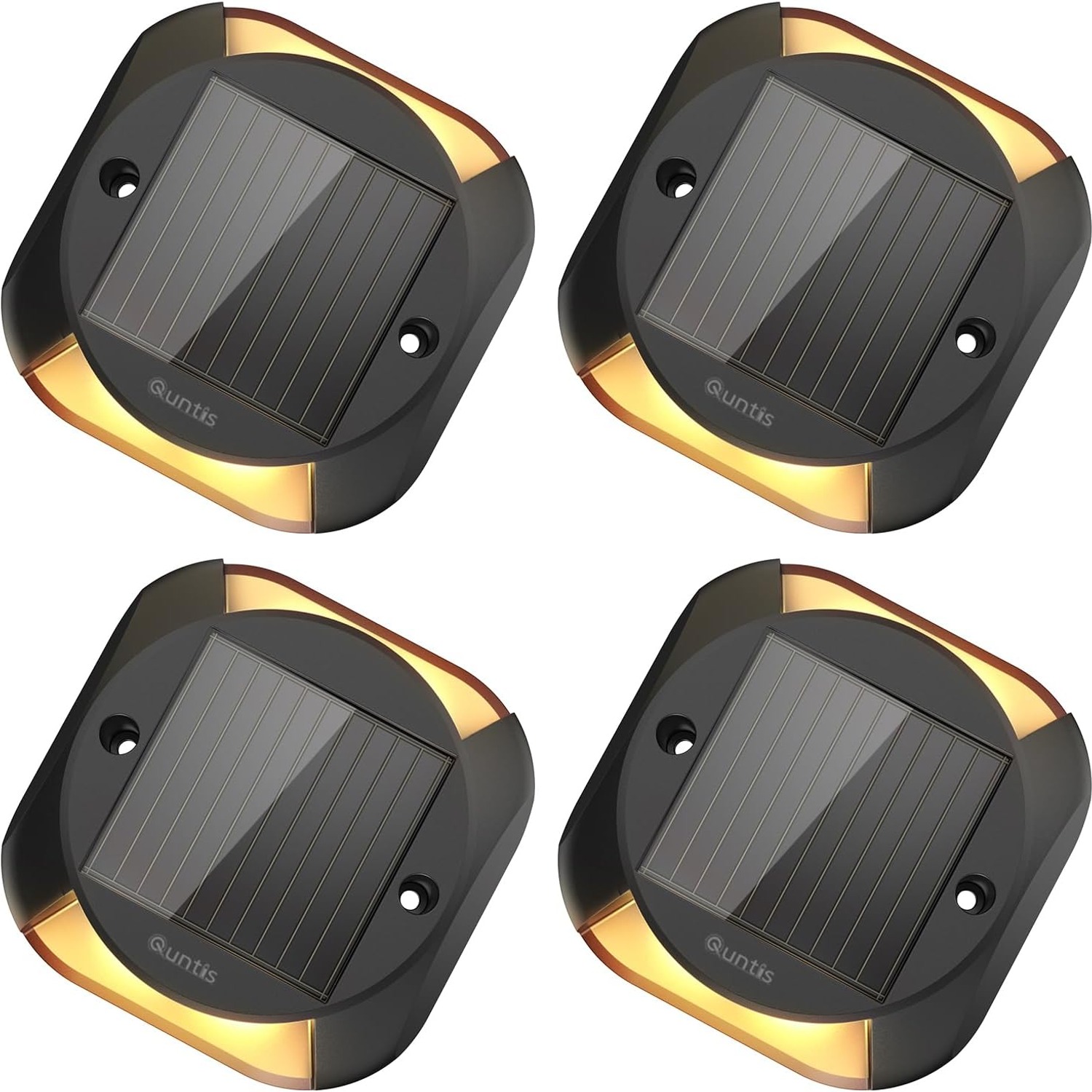
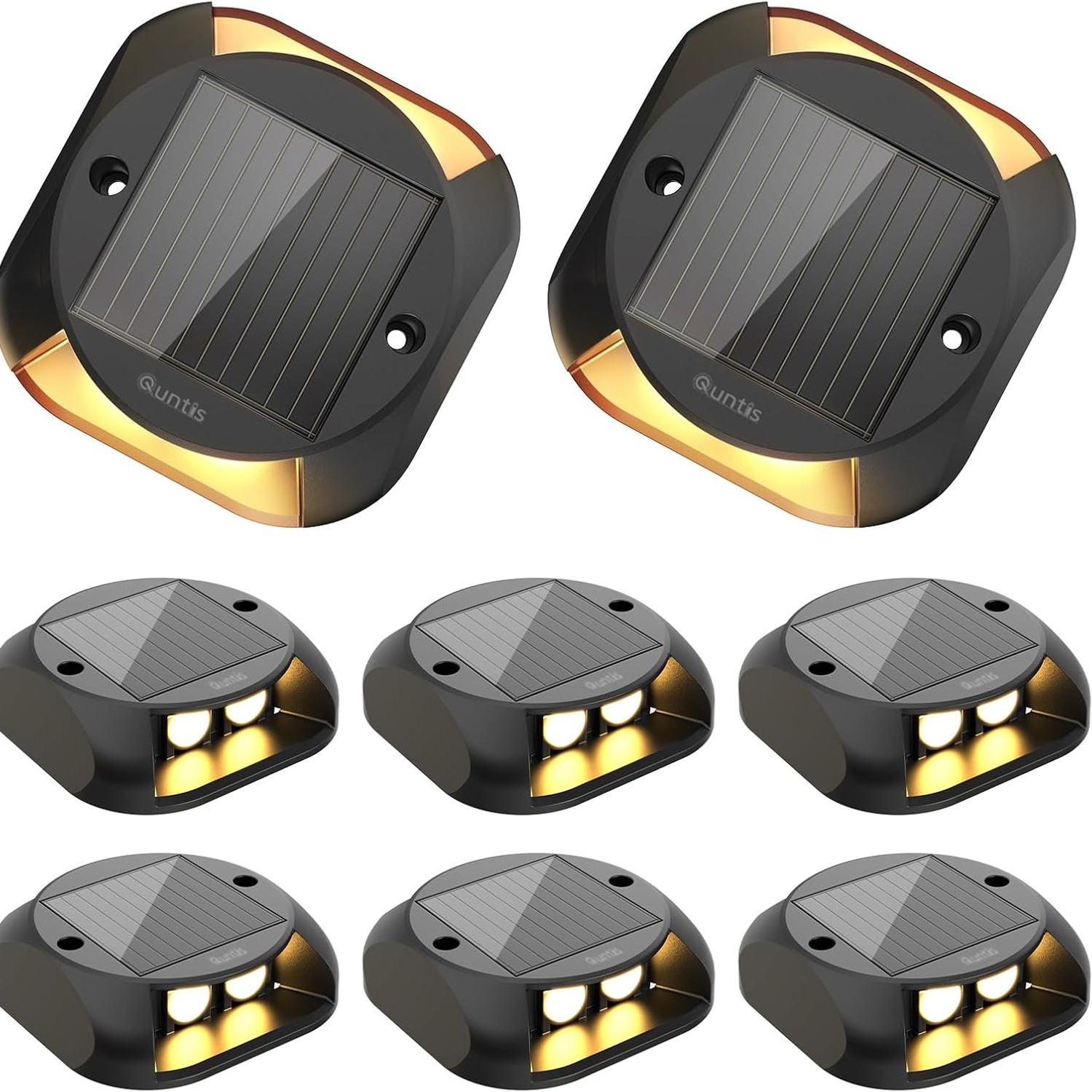
Quntis Two-Way Solar Driveway Lights (4 Pack)

$78.99 $94.99 Save $16
  • Solar Powered
  • Automatic At Dusk
  • Tough ABS Shell
  • Two-Way Warm Glow

Price: $78.99 $94.99

  • Free tracked NZ-wide delivery on orders $119+, otherwise a flat $15
  • Pay by card or PayPal, handled by the payment provider
  • 14 days to change your mind, plus your statutory rights
Product specifications
Pack Size4 lights
Fixture TypeOutdoor ground light
StyleTwo-way pathway light
Light SourceLED
Number Of Light Sources4
Light ColourWarm white
Power SourceSolar
Switch TypeToggle
Water ResistanceWater resistant
Special FeaturesAnti-UV coating, salt-spray resistant, no electrician needed
Mounting TypeDeck mount, surface mounted
Indoor Or OutdoorOutdoor
Suggested LocationsDriveway, pathway, deck, garden, porch, fence
MaterialABS (acrylonitrile butadiene styrene)
FinishUnfinished
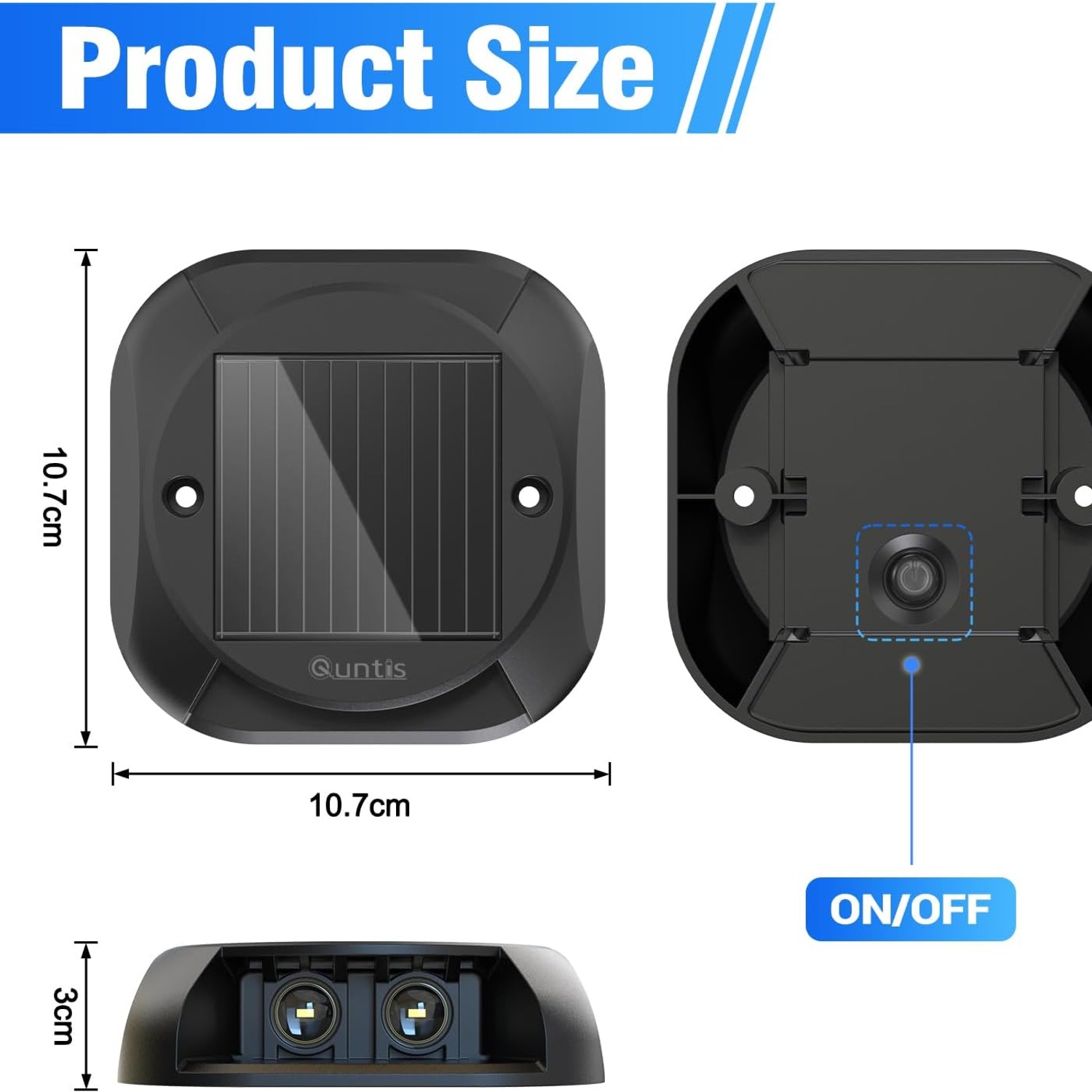
Item Dimensions (L x W x H)11.5 x 11.5 x 13 cm
Item Weight610 g
Assembly RequiredNo
IncludedInstruction manual
BrandQuntis
Model NumberZQ-LJD-002
ManufacturerZhongshan Zhongqian Intelligent Electrical Technology Co., Ltd
Weight610 g
Shipping & returns

Tracked delivery anywhere in New Zealand. It is free on orders of $119 or more, and a flat $15 below that.

If it is not right for you, send it back within 14 days of delivery in resaleable condition and we refund the price you paid, including standard delivery. That is a voluntary policy we offer on top of your legal rights. You cover the cost of returning it unless the item is faulty.

If it arrives faulty, damaged or not as described, we put it right at no cost to you under the Consumer Guarantees Act 1993 and the Fair Trading Act 1986, return postage included.

Shipping details · Refunds and returns

Solar PoweredCharges in daylight, no wiring or power point required.
Automatic At DuskA built-in sensor turns the lights on and off for you.
Tough ABS ShellImpact-resistant plastic made for ground-level outdoor use.
Two-Way Warm GlowLight spreads both ways for soft, low-glare edge marking.

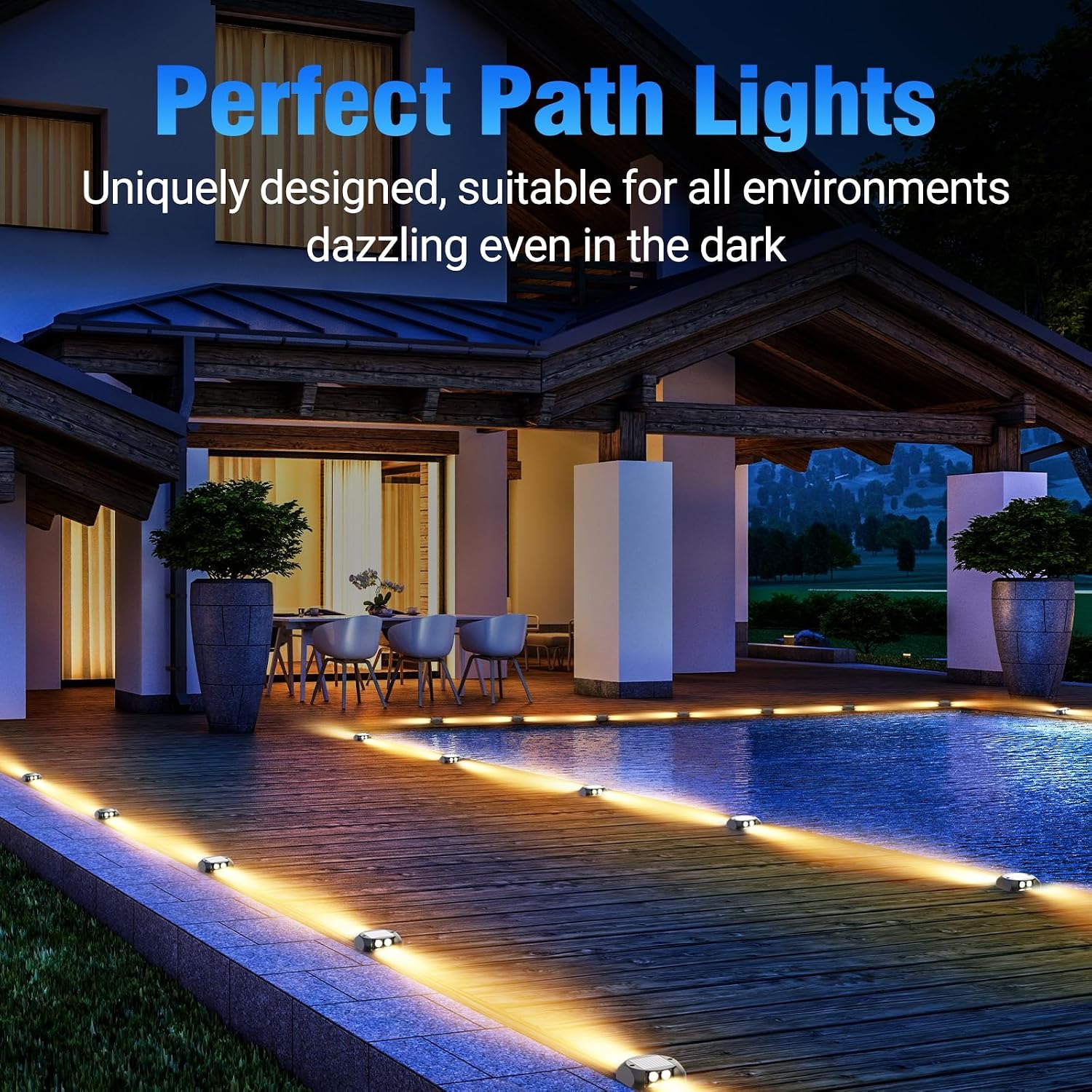
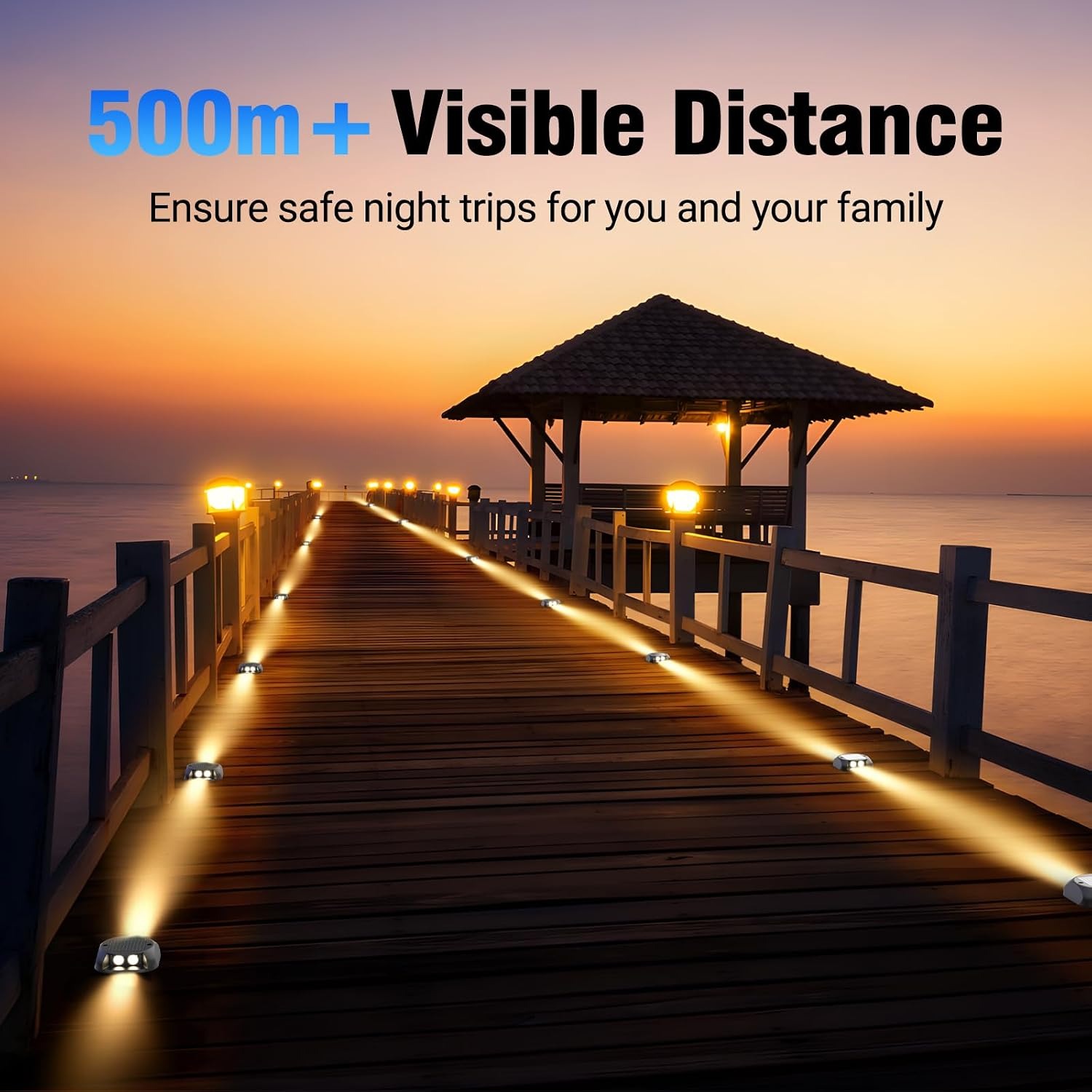
Mark the edge of every path, step and driveway with warm, glare-free solar driveway lights that switch themselves on the moment the sun drops.

A four-pack of surface-mounted, two-way LED ground lights in warm white, powered entirely by the sun, with no wiring, no switch to remember and no electrician needed.

A set of four warm white solar driveway lights that mark the edges of a drive, path, deck or step without a single metre of cable.

Each light runs on sunlight alone and switches itself on at dusk thanks to a built-in light sensor, so there is nothing to remember and nothing to plug in.

The two-way design pushes a soft glow out from both sides of the housing, which marks an edge clearly without shining straight into anyone's eyes.

The housings are moulded from ABS, a tough impact-resistant plastic chosen for outdoor fittings that sit at ground level.

Surface mounting means no digging and no assembly, so you can place all four in an afternoon and move them later if the layout changes.

Quntis Two-Way Solar Driveway Lights (4 Pack)

Most outdoor accidents at home happen in the five metres between the car and the front door. A kerb you forgot about, a step that drops away, the edge of a drive that disappears into lawn once the sun goes. Solar driveway lights fix that in the simplest way possible, by putting a small, steady marker exactly where the edge is. This four pack gives you enough to do a short run of driveway, a flight of deck steps, or the two corners where a path turns.

Quntis Two-Way Solar Driveway Lights (4 Pack)

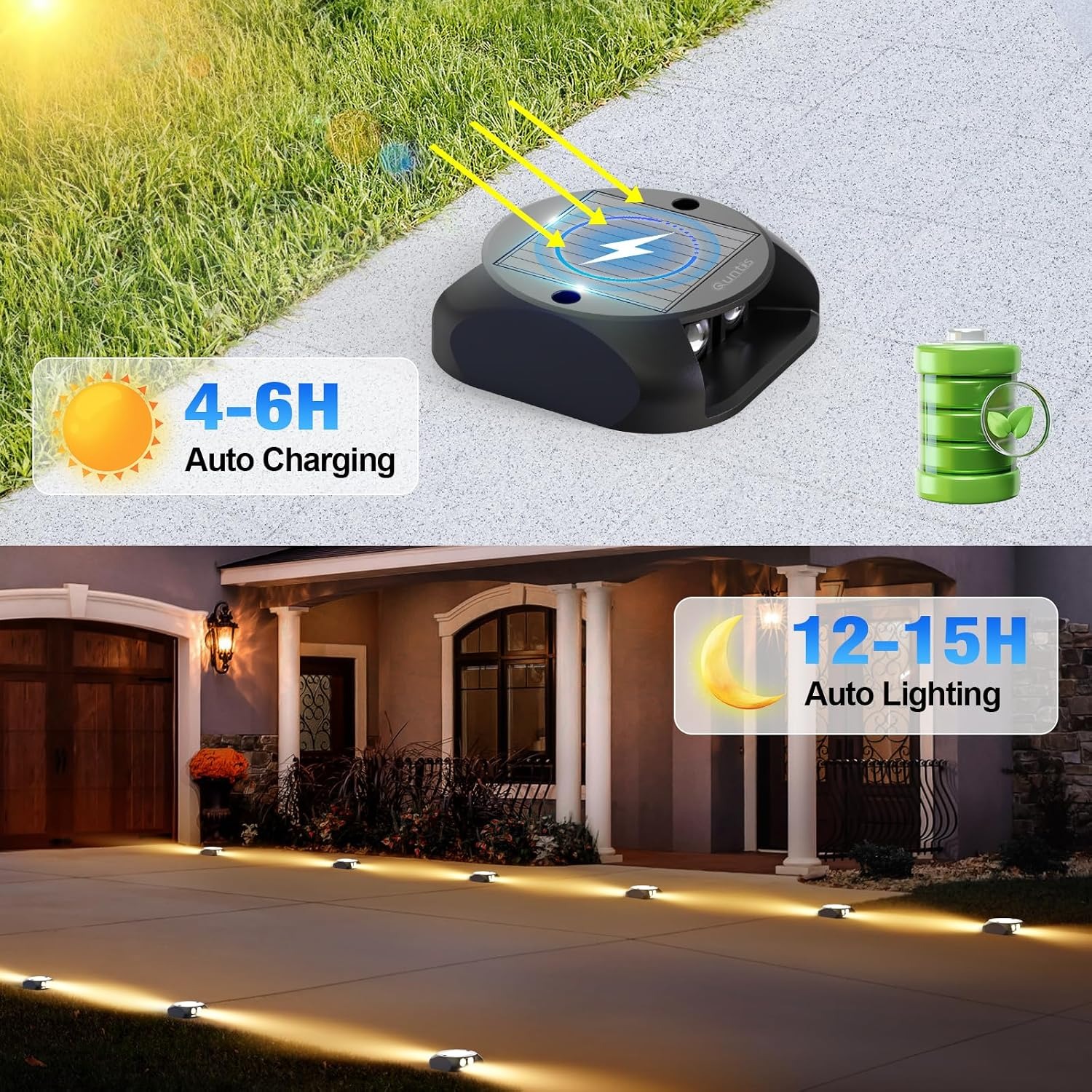
Each unit works on its own. A solar panel sits on the top face and collects daylight, a rechargeable cell stores it, and a light sensor watches the ambient level. When the light drops at dusk, the LEDs come on. When morning arrives, they switch off and the panel goes back to charging. There is no timer to set, no app to pair and no switch on the wall. The only control is a toggle switch on the unit itself, which you leave in the on position so the automatic sensor can do its job.

Quntis Two-Way Solar Driveway Lights (4 Pack)

The optical design is what separates these from a plain disc light. The two-way housing throws warm white light out of both sides rather than straight up, so you see the lit edge and the surface beside it instead of a bright dot in your field of view. That matters on a driveway, where glare from a badly aimed fitting can be worse than no light at all. Warm white also reads as softer and more welcoming than the cold blue-white some cheap solar lights produce.

Quntis Two-Way Solar Driveway Lights (4 Pack)

Materials are chosen for a hard life. The body is ABS, the same impact-resistant plastic used for a lot of outdoor fittings and automotive trim, and the listing notes an anti-UV coating and salt-spray resistance, which are the two things that normally kill ground lights near the coast. The unit is rated water resistant. Each light measures 11.5 by 11.5 by 13 centimetres and the pack weighs 610 grams, so they are compact enough to sit flush against a step riser or deck board without looking bulky.

Quntis Two-Way Solar Driveway Lights (4 Pack)

Installation is deliberately dull, which is the point. The lights are surface mounted and arrive with no assembly required and an instruction manual in the box. You decide where the edges are, fix each light down, give them a full day of sun before the first night, and then forget about them. If you rearrange the garden next spring, you can lift them and move them, which is not something you can say about anything wired into a trench.

Not sure yet? That is fine.

A solar light has to suit the spot, and you cannot always judge that from a photograph. If it is not right for you, send it back within 14 days of delivery in resaleable condition and we refund the price you paid, including standard delivery. That is on top of your Consumer Guarantees Act 1993 rights if anything arrives faulty.

If it turns up faulty, damaged or not as described, that is on us. The Consumer Guarantees Act 1993 and the Fair Trading Act 1986 covers you, and we pay the return postage. Read the full detail on our refunds and returns page, or ask us anything before you order.

Frequently Asked Questions

What exactly is in the box?

You get four solar driveway lights and an instruction manual. No assembly is required, so the lights are ready to position straight out of the packaging. Any fixings or adhesive supplied will be listed in the manual.

How do solar driveway lights work?

A small solar panel on the top of each unit converts daylight into electricity and stores it in a rechargeable cell inside the housing. When ambient light falls at dusk, a sensor switches the LEDs on using that stored charge. In the morning the lights turn off and the panel starts charging again.

Do I need an electrician?

No. These are standalone solar units with no mains connection, so there is no wiring, no transformer and no trenching. The product is described as needing no electrician, which is one of the main reasons people choose solar ground marker lights over low-voltage systems.

What colour is the light?

Warm white. It is a softer, more yellow-toned light than the cool blue-white you see on many budget solar lights, and it tends to look more natural against brick, timber decking and paving.

What does two-way mean?

The housing emits light from two sides rather than from a single face. That spreads the glow along the edge you are marking instead of concentrating it in one bright spot, and it keeps the light out of your eyes as you walk or drive past.

How many lights are in a pack?

Four. For a short driveway run most people space them along one side, and for steps one light per two or three treads is usually enough. If you need a longer run, buy more than one pack.

How big is each light?

Each unit measures 11.5 centimetres long, 11.5 centimetres wide and 13 centimetres high. The whole four-pack weighs 610 grams, so each light is light enough to mount on a deck board or step riser.

What material is the housing made from?

ABS, which is acrylonitrile butadiene styrene. It is a tough, impact-resistant plastic widely used for outdoor fittings because it handles knocks and temperature swings better than brittle alternatives.

Are they waterproof?

The product is listed as water resistant and includes a sealed outdoor design, so rain and damp are expected conditions. A specific IP rating is not confirmed in this record. We would not recommend submerging them or placing them where water pools and sits.

Can I drive over them?

They are marketed as drive over solar lights for driveways and docks, and the ABS housing is built for that kind of traffic. We can only confirm what is in the product record, so treat them as edge markers rather than something to deliberately aim a wheel at. Mounting at the edge of a drive rather than in the middle gives the longest life.

How long do they stay lit each night?

Runtime depends on how much sun the panel receives during the day, the season and the temperature. A full day of direct sunlight will give a noticeably longer run than a grey, overcast day. The exact battery capacity and runtime figure is not specified in this record.

How long do they take to charge?

A full day of unobstructed daylight is the sensible target. Charging is slower in winter, under tree cover or when the panel is dusty, so give the lights the sunniest position you can. Charge them for a full day before the first night of use.

Will they work in winter?

Yes, but expect shorter runtimes. Days are shorter, the sun sits lower and cold reduces battery performance, so the lights may fade earlier in the night. Keeping the panels clean and clear of leaf litter helps a lot in the colder months.

Do they work in the shade?

Poorly. Solar lights need direct daylight on the panel to charge properly, so a spot under a dense hedge or a deep eave will leave them dim. If part of your path is permanently shaded, place the lights where they catch the sun and accept a slightly wider spacing there.

Is there an on and off switch?

Yes, each unit has a toggle switch. You leave it in the on position so the dusk sensor can control the light automatically, and switch it off only when storing the lights or if you want a particular area dark for a while.

How do I install them?

They are surface mounted, so you fix them flat onto decking, a step, a path edge, a kerb or a fence rail. No digging and no assembly is involved. Follow the included instruction manual for the fixing method supplied.

Can I move them later?

That is one of the advantages of surface-mounted solar lights. If you redesign the garden or change where you park, you can lift the units and refit them somewhere else without touching any cable. Keep any original fixings in case you need them.

Where are the best places to use them?

Driveways, pathways, decks, porches, garden edges and fences are the listed uses. They work particularly well at the top and bottom of steps, at the point where a drive meets lawn, and around a turning circle where the edge is hard to judge at night.

Can I use them around a pool?

The product lists pool side safety and salt-spray resistance among its features, so a poolside deck or a coastal setting is within the intended use. Rinse them with fresh water occasionally if they get splashed with chlorinated or salt water, and dry them off.

Will they survive near the sea?

Salt-spray resistance is one of the listed features, and the anti-UV coating is there to slow down yellowing and brittleness from strong sun. Coastal conditions are hard on every outdoor fitting, so a regular fresh-water rinse will extend their life.

Are they bright enough to light a whole driveway?

They are edge markers, not floodlights. The job is to show you where the boundary is, which is what you actually need when reversing or walking in at night. If you want broad area lighting, pair them with a separate wall or flood fitting.

Will they annoy the neighbours?

Unlikely. The warm white output is modest and the two-way design directs light sideways along the ground rather than upward, so there is very little spill into windows. That is a real advantage over tall solar path lights with exposed globes.

How do I clean them?

Wipe the panel with a damp cloth whenever dust, pollen or leaf litter builds up, because a dirty panel is the most common cause of dim solar lights. Rinse the housing with plain water and dry it. Skip solvents, bleach and abrasive pads.

Do the batteries need replacing?

All rechargeable cells lose capacity over years of daily cycling, and you will notice shorter runtimes before you notice anything else. Whether the cell in this model is user-replaceable is not specified in this record. Check the included manual before opening any housing.

Can I use them indoors?

The product is specified for outdoor use. Indoors the panel will not get enough light to charge, and the dusk sensor behaves unpredictably under artificial lighting, so the lights will not run reliably.

How many packs do I need?

Measure the run you want to mark and divide by your preferred spacing. A spacing of one to two metres along a path gives a clear line of markers, so a ten metre run usually takes two packs. For steps, count one light every second or third tread.

Do they come on at a set time?

No, they use a light sensor rather than a clock. That means they follow the real sunset through the year and never need adjusting for daylight saving or seasonal change. Shade or a nearby porch light can affect when they trigger.

What about delivery?

Orders are packed and dispatched after your order is confirmed, and tracking is emailed as soon as the parcel leaves. Delivery times vary by destination within our delivery network. Current timeframes are shown at checkout.

Do they make a good gift?

They do, especially for someone who has just moved into a house with a dark drive or an awkward set of garden steps. There is nothing to wire and nothing to configure, so the recipient can set them up the same day. The four-pack is a sensible, useful size.

What if they are not right for my place?

Let us know and we will sort it out. If the lights arrive damaged, faulty, or simply are not what you expected, contact us with your order number and photos where relevant, and we will arrange a return, replacement or refund under our returns policy. Keep the packaging until you are happy with them.

Solar Driveway Lights, A Practical Buyer's Guide

6 min read Solar Lights

The problem with dark edges

Think about the last time you reversed up a drive at night, or carried shopping down a few garden steps in the rain. The trouble is almost never that it is too dark to see generally. It is that you cannot tell exactly where the edge is. The drive blends into the lawn. The top step looks the same as the flat section before it. The kerb is somewhere in that grey smudge beside the gate.

That is a marking problem, not a brightness problem. A big floodlight on the house wall makes the area bright but also throws hard shadows, which can hide the very edge you are trying to find. Small ground-level markers do the opposite. They sit on the boundary and say, quietly, here it is.

Solar driveway lights are the easiest way to solve that. There is no cable, no trench, no breaker, and no electrician. You place them, let them charge, and they run themselves.

How they actually work

Each light in this four pack is a self-contained unit. On top sits a solar panel. Inside is a rechargeable cell and a small circuit. On the outside is a toggle switch, and somewhere on the face is a light sensor.

During the day the panel converts sunlight into electricity and tops up the cell. The sensor watches the ambient light level. When it falls past a threshold at dusk, the circuit switches the LEDs on and they run off the stored charge. At dawn the sensor sees daylight again, shuts the LEDs down and the cycle restarts.

The toggle switch is not a nightly on and off control. You set it to on when you install the lights and leave it there, because the sensor is what does the actual switching. The switch exists so you can isolate the unit for storage, or deliberately darken a spot.

This matters for how you place them. The panel needs direct daylight, not just ambient brightness. A light under a dense shrub or in the permanent shade of a wall will charge slowly and fade early in the evening. Give every unit as much open sky as you can, even if that means shifting it half a metre from where you first imagined it.

Why the two-way design is worth having

Plenty of solar ground markers are just a disc with LEDs behind a lens. They glow, but they tend to glow at you. Catch one at the wrong angle while walking and you lose your night vision for a few seconds, which is not helpful on steps.

These use a two-way housing instead. The light comes out of both sides, spreading sideways along the surface rather than up into your face. You see the lit ground, you see the texture of the paving or decking, and you see the edge. The lights themselves stay in the background where they belong.

The warm white colour helps too. Cool white solar lights can look clinical and slightly blue against brick and timber. Warm white reads as softer and sits better with most outdoor materials, and it tends to look more like a considered lighting choice than a safety fitting.

Who these suit

They suit anyone with a boundary that disappears at night. A driveway that meets lawn with no kerb. A deck with a step down to the garden. A path that bends behind a hedge. A dock or jetty edge. A fence line along a dark side return.

They also suit renters and anyone who does not want to commit. Because the lights are surface mounted with no assembly required, nothing is permanent in the way a wired system is. If you move, or you change the garden layout, the lights come with you.

They are less suited to someone wanting broad, bright area lighting for working outside or for a security camera. That is a different job, and a wall-mounted fitting does it better. The best solar driveway lights are edge markers by design, and trying to make them do floodlight duty will only disappoint.

How to choose and how many to buy

Start with the run you want to mark. Walk it at night with a torch and note the points where you actually feel unsure: the start of the drive, the turning point, the top and bottom of any step, the gatepost.

For a path or driveway edge, spacing of roughly one to two metres gives a clear dotted line. Tighter spacing looks deliberate and reads as a defined edge. Wider spacing can look sparse and leaves gaps where the edge is still ambiguous. A four pack covers somewhere between four and eight metres depending on how you space them, so a ten metre drive usually wants two packs.

For steps, you do not need one on every tread. One at the top, one at the bottom and one in the middle of a long flight is usually enough to show the rhythm of the stairs.

Also think about sun. Before you fix anything, check where the sun actually falls across the day. Shadows from a fence or a tree that seem minor in June can be total in December. If one part of your run is in permanent shade, consider putting more lights in the sunny section and accepting a lighter touch in the shade, rather than installing units that will never charge properly.

Materials and weather

The housings here are ABS, a tough impact-resistant plastic used across outdoor and automotive products precisely because it takes knocks and temperature swings without cracking. The listed features also include an anti-UV coating and salt-spray resistance.

Those two details are more important than they sound. Ultraviolet light is what turns cheap outdoor plastic yellow and brittle after a season or two. Salt spray is what corrodes and clouds anything near the coast. A fitting that addresses both will simply last longer in a place where lights sit outside every day of the year.

The units are listed as water resistant, which is what you want for rain, dew and hose spray. We would still avoid any spot where water pools and sits for days, since standing water is harder on a seal than falling rain.

Each unit is 11.5 by 11.5 by 13 centimetres, which is compact enough to sit against a step riser or deck board without looking like equipment. The whole pack weighs 610 grams.

Installing and looking after them

Installation is the easy part. The lights are surface mounted, so you are fixing them to a flat face: a deck board, a step riser, a path edge, a kerb, a fence rail. There is no digging and no assembly. Follow the method in the included instruction manual for whatever fixings come with your pack.

Two tips make a real difference. First, make sure the toggle switch is on and give the lights a full day of sun before you expect a good first night. Solar cells arrive partly charged at best. Second, clean the panels. A thin film of dust, pollen or salt cuts charging more than most people expect, and a dim solar light is far more often a dirty panel than a dead battery.

Beyond that, care is simple. Wipe the panel with a damp cloth when it looks grubby, rinse the body with plain water, dry it off, and keep grass and branches from growing over the top. Skip solvents and abrasive pads, which will dull and scratch the plastic.

Over several years, rechargeable cells lose capacity, and the first sign is shorter runtimes rather than a sudden failure. Whether the cell in this particular model can be replaced is not stated in the product record, so check the manual before opening a housing.

The short version

If the edges of your drive, path or deck vanish after dark, a set of ground-level markers solves it faster and cheaper than anything wired. This four pack gives you warm white, two-way light from a tough ABS housing, with an automatic dusk sensor so there is nothing to switch and nothing to remember.

Place them where they get real sun, space them about one to two metres apart, charge them for a day before you judge them, and keep the panels clean. Do that and they will quietly do their job every night, which is exactly what you want from outdoor lighting you never have to think about.

Browse the shop

Ready to light the edges?

Four warm white solar driveway lights, no wiring, and an afternoon of work is all it takes to make the dark bits of your property safe.

Ask us a question

Page summary

The Quntis ZQ-LJD-002 is a four-pack of warm white solar driveway lights for outdoor ground and deck mounting. Each unit uses LED light sources with a two-way pathway design, is powered by an integrated solar panel, and has a toggle switch. The housing is moulded from ABS and listed features include an anti-UV coating, salt-spray resistance and water resistance. Each light measures 11.5 by 11.5 by 13 centimetres and the pack weighs 610 grams. Installation is surface mounted with no assembly required, and an instruction manual is included. Suggested uses are driveways, pathways, decks, gardens, porches and fences. Colour is warm white. Country of origin, exact IP rating, battery capacity and runtime are not specified in this record.